

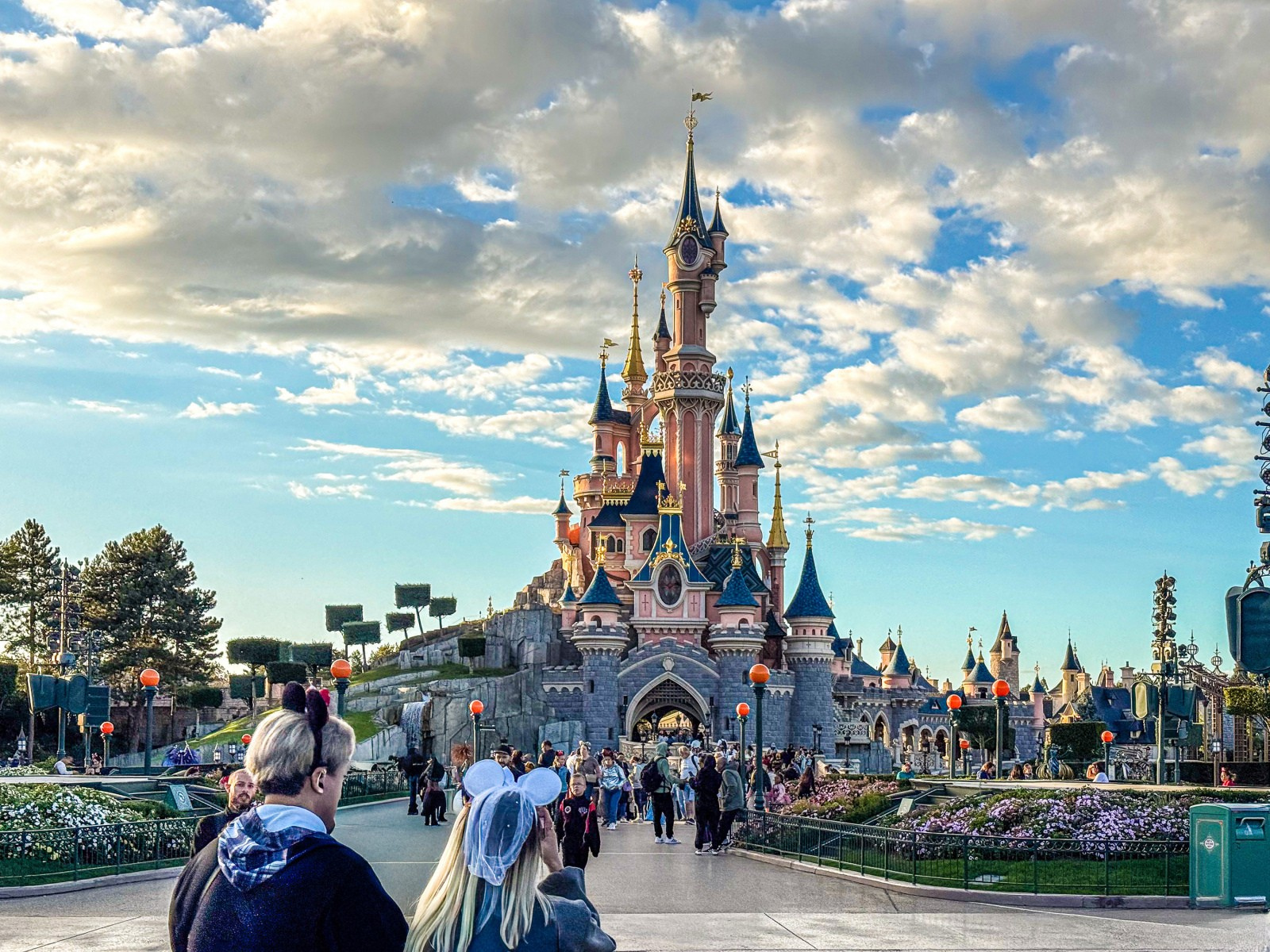
Bedford's Entertainment Resort vs Disneyland Paris: Why UK Investors Are Betting Big
Disneyland Paris changed French property forever. Bedford's Entertainment Resort is about to do the same - but bigger. Here's why savvy investors are treating this differently.

Don
5-Star Superhost & Property Investment Expert
Disneyland Paris Changed French Property Forever
In 1992, when Euro Disney opened its gates east of Paris, local property investors thought they knew what was coming.
They were wrong. Spectacularly, life-changingly wrong.
Not because the opportunity was smaller than expected - but because it was so much bigger that the ones who positioned early became genuinely wealthy. And the ones who waited, watched, and hesitated... they got priced out within three years.
Now Bedford's Entertainment Resort is offering the UK the same opportunity.
But bigger. Here's why.
The Disneyland Paris Story (That Nobody Tells Properly)
Let me tell you what actually happened around Marne-la-Vallée in the early 90s.
Before Disney announced (pre-1987):
- Average property prices: ~500,000 francs for a family home
- Rental yields: moderate, nothing special
- The area: forgettable Parisian suburbs that Parisians forgot existed
After announcement, before opening (1987-1992):
- Property prices increased 35-45% in the immediate vicinity
- Investors from across Europe started buying
- Rental demand from construction workers created an entirely new market
- Local infrastructure investment transformed previously disconnected villages
After opening (1992-1997):
- Property prices in the core zone increased a further 40%+
- Short-term rental demand exceeded all projections
- New hotels, restaurants, and entertainment venues created thousands of jobs
- The entire eastern Paris region was permanently revalued
The kicker:
Early investors who bought in 1988-1989, held through the opening, and converted to short-term lets saw total returns of 200-300% over a decade. Not annualised - total. But still exceptional for property.
Why Bedford's Entertainment Resort Is Bigger
I know what you're thinking. "That was 30 years ago. Different market. Different world."
You're right. But here's why that actually makes Bedford's Entertainment Resort a bigger opportunity:
1. The Short-Term Let Revolution
In 1992, Airbnb didn't exist. Booking.com barely existed. If you wanted to offer short-term accommodation, you needed to be a hotel or a B&B with all the licensing, staffing, and overhead that entailed.
Today? You can list a property on multiple platforms in an afternoon. The infrastructure for short-term lets is mature, professional, and accessible to individual investors in ways that were impossible in 1992.
This means more investors can participate - but also means the best operators will capture disproportionate rewards.
2. The Scale Is Unprecedented
Disneyland Paris cost approximately €4.4 billion (in 1992 money) for Phase 1.
Bedford's Entertainment Resort is projected at £50 billion.
Even adjusting for inflation, we're talking about a development roughly 4-5x the scale of Europe's largest theme park resort. The visitor projections, employment numbers, and accommodation demand all scale accordingly.
3. The UK Had Nothing Like This
France already had major tourist infrastructure. Paris itself drew tens of millions of visitors. The Disney development added to existing tourist flows.
The UK - specifically the Midlands - has nothing comparable. Bedford's Entertainment Resort won't be capturing a share of existing tourism. It will create an entirely new destination, drawing visitors who currently don't travel to this region at all.
That's a different proposition. A bigger proposition.
The Numbers That Matter
Let me put some figures on this:
Disneyland Paris:
- 15 million visitors per year (current)
- 17,000 direct employees
- 68,000 indirect/induced jobs in the region
- Generated €7.5 billion in tourism spending in France (2019)
Bedford's Entertainment Resort (projected):
- 8.5 million annual visitors at opening, rising to 12.5 million at full development
- 8,000+ direct employees at the park
- 20,000+ construction jobs during development
- Projected to be one of Europe's largest theme parks by investment and scale
The maths is simple. More visitors = more accommodation demand. More employees = more housing demand. More spending = more local economic activity.
Property implications:
If Bedford follows the Disneyland Paris pattern (which there's no reason to think it won't), we're looking at:
- 35-50% property price increases in the core zone (0-15 minutes) by opening
- Significant rental yield improvements as short-term let demand materialises
- Creation of an entirely new premium for "the resort developer proximity" in property valuations
- Long-term structural change in the regional property market
Why UK Investors Are Moving Now
I'm having conversations with serious investors every week. Here's what they're telling me:
"I missed London. I'm not missing this."
A lot of property investors watched London prices surge over 20+ years and either couldn't afford to enter or waited too long. Bedford's Entertainment Resort represents a once-in-a-generation chance to get ahead of a transformational development.
"The yield story works at current prices."
This is crucial. Unlike speculative bubbles, properties in Bedford and surrounding areas can still generate positive cash flow at today's prices with today's rental demand. The Bedford's Entertainment Resort uplift is cream on top, not the whole cake.
"I've seen what happened in Orlando."
Anyone who's studied the resort developer's impact on Orlando real estate knows what's coming. The area around the resort developer Orlando went from basically nothing to one of the most valuable short-term rental markets in America. Bedfordshire is about to have its Orlando moment.
What Disneyland Paris Investors Got Right
Let's learn from history. The investors who maximised the Disneyland Paris opportunity:
1. Bought early, before infrastructure
The biggest gains went to those who bought when the area was still "just farmland with a promise." They accepted short-term inconvenience for long-term positioning.
2. Thought about end use from day one
Smart investors didn't just buy any property. They bought properties that would work for short-term visitors: good transport links, family-friendly layouts, parking access.
3. Built operations before demand arrived
When the park opened, experienced operators already had listings, reviews, and systems. They captured the first wave of visitors. Latecomers struggled to build reputation in a suddenly competitive market.
4. Held through volatility
The period between announcement and opening wasn't smooth. There were delays, concerns, negative press. The investors who sold during the uncertainty missed the payoff.
What Disneyland Paris Investors Got Wrong
Equally instructive:
1. Overestimating immediate returns
Some investors expected instant riches. The reality was years of construction, noise, disruption, and uncertainty. Patience was required.
2. Buying the wrong properties
Properties that couldn't be adapted for short-term lets - wrong layouts, no parking, poor access - didn't participate in the accommodation boom regardless of location.
3. Underestimating operational requirements
Owning a property near Disneyland Paris was only half the battle. Managing it effectively for short-term lets required systems, responsiveness, and professionalism that many individual investors couldn't deliver.
4. Ignoring the construction phase
Some investors bought, couldn't rent during the construction period, and ran into cash flow problems before the demand arrived. The construction phase is an opportunity, not a waiting room.
The Bedford Playbook
Based on everything I've studied and everyone I've advised, here's what I think the smart play looks like:
Phase 1 (Now - 2027): Position
- Acquire properties in the core 30-minute zone
- Focus on contractor let potential for immediate cash flow
- Set up short-term let operations and build platform presence
- Accept that you're buying the future, not instant returns
Phase 2 (2027-2030): Build
- Transition from contractor focus to visitor-ready positioning
- Invest in property upgrades that appeal to families and theme park visitors
- Develop reputation and reviews before the main demand wave
- Watch for opportunities as less patient investors sell
Phase 3 (2031+): Operate
- Maximise yield through professional short-term let management
- Adjust pricing for seasonal and event-driven demand
- Consider portfolio expansion as operational expertise compounds
- Play the long game - this isn't a flip, it's a legacy asset
The Big Difference Nobody's Talking About
Here's what I haven't seen anyone else discuss:
Disneyland Paris was built in an era before professional short-term let management existed at scale. Individual landlords were competing against hotels with significant structural advantages.
Bedford's Entertainment Resort is landing in an era where professional short-term let management is mature, accessible, and effective. The infrastructure exists for individual investors to compete effectively against institutional hospitality.
This levels the playing field in ways that weren't possible 30 years ago.
If you have the right property, in the right location, with the right management - you can capture returns that previously would have required building your own hotel.
The Risk Nobody Wants To Mention
I'll say what others won't: this isn't guaranteed.
Development projects get delayed. Visitor projections sometimes miss. Economic conditions change. Regulatory environments shift.
If you're investing everything you have in a single Bedford property based solely on resort promises, you're taking more risk than is sensible.
The smart approach is:
- Properties that work financially without the resort premium
- Diversified portfolios that don't depend on a single outcome
- Cash reserves to weather construction period volatility
- Realistic timelines that assume delays
Bedford's Entertainment Resort will almost certainly transform the region. But "almost certainly" isn't "definitely." Invest accordingly.
The Bottom Line
Disneyland Paris made early investors wealthy. Bedford's Entertainment Resort offers a similar - arguably larger - opportunity.
But only for those who:
- Move now, not later
- Buy the right properties, not just any properties
- Build operations before demand arrives
- Hold through the uncertainty
- Manage professionally, not amateurishly
The window is open. It won't stay open forever.
Every month that passes, more investors wake up to this opportunity. Every month, prices in the core zone tick higher. Every month, the "early mover" advantage shrinks.
I can't tell you what to do with your money. But I can tell you what I'm doing with mine: positioning aggressively, operating professionally, and playing the long game.
Because I've read what happened around Disneyland Paris. And I'm not about to watch it happen around Bedford's Entertainment Resort from the sidelines.
Take Action
Ready to move forward? Here's what to do next.
Ready to Maximise Your Property Returns?
Let's discuss your property goals and see if we're the right fit to help you succeed.
Frequently Asked Questions
Common questions about this topic